Patent Ductus Arteriosus (PDA)
Quick Facts
- Patent ductus arteriosus (PDA) is a small blood vessel that doesn’t close after birth.
- Some babies need treatment to close the PDA.
- PDA treatment can be medication or a procedure.
- Most people have no complications after a PDA is repaired.
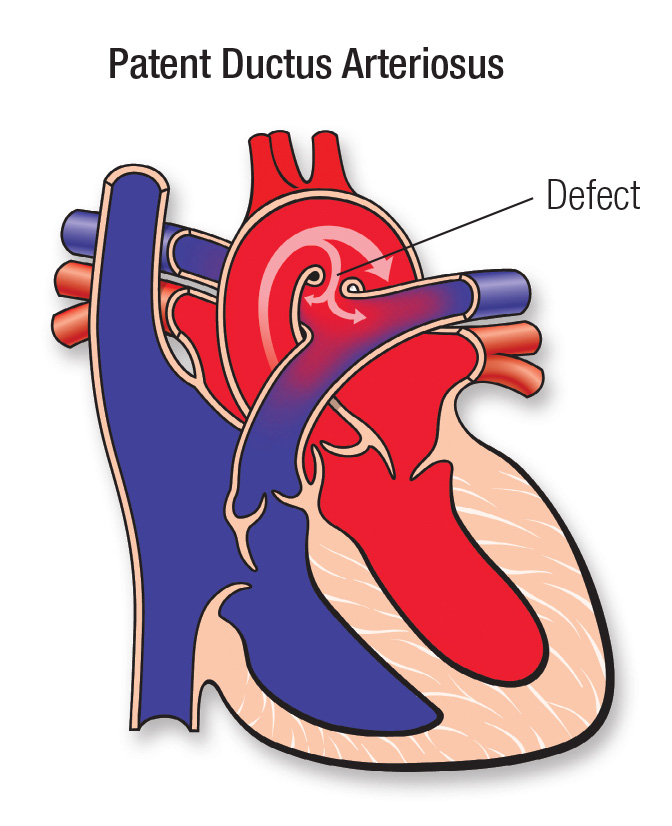
What is patent ductus arteriosus?
Patent ductus arteriosus is a blood vessel that connects the aorta and the pulmonary artery before birth. If it stays open after birth, it is called patent ductus arteriosus.
Before a baby is born, this vessel helps blood bypass the lungs, which aren’t used yet. After birth, the lungs take over, and the vessel is supposed to close within a few days.
If it stays open (or patent), blood can flow from the aorta into the pulmonary artery. This sends extra blood to the lungs and can make the heart and lungs work harder. This is called patent ductus arteriosus (PDA).
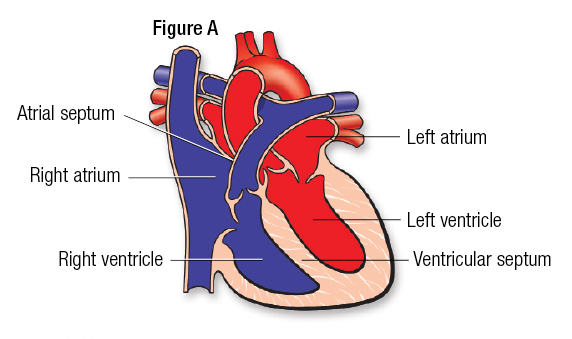
The heart has four chambers. The upper two chambers are the atria, and the lower two are the ventricles (Figure A). The chambers are separated by a wall of tissue called the septum. Blood is pumped through the chambers, aided by four heart valves. The valves open and close to let the blood flow in only one direction.
What causes PDA?
The ductus arteriosus is a normal blood vessel in a baby before birth. It connects the aorta, the body’s largest artery, to the lung artery and lets blood bypass the lungs.
Every baby is born with this vessel. After birth, it’s no longer needed and usually closes within the first few days.
Sometimes it doesn’t close. This happens more often in babies born early and is rare in full-term babies. In most cases, the cause isn’t known. Some children may also have other heart defects along with a PDA.
How does PDA affect the heart?
Normally, the left side of the heart pumps blood to the body, and the right side pumps blood to the lungs. With PDA, extra blood flows from the aorta into the pulmonary arteries. If the opening is large, the extra blood makes the heart and lungs work harder and can cause fluid buildup in the lungs.
What are the symptoms of PDA?
If the PDA is small, it usually doesn’t cause symptoms. It usually does not cause the heart and lungs to work noticeably harder. A healthcare professional may only hear a murmur (an extra sound) when listening to the heart.
If the PDA is large, the heart and lungs have to work harder. The baby may breathe faster or may have trouble feeding and gaining weight. Symptoms may not appear right away.
Over time, extra blood flow to the lungs can raise pressure in the lung blood vessels. If this isn’t treated, the extra blood flow can damage the lung blood vessels and lead to pulmonary hypertension.
How is PDA treated?
If the PDA is small, it usually doesn’t make the heart and lungs work harder. It may close on its own in the first few months of life. Treatment may not be needed.
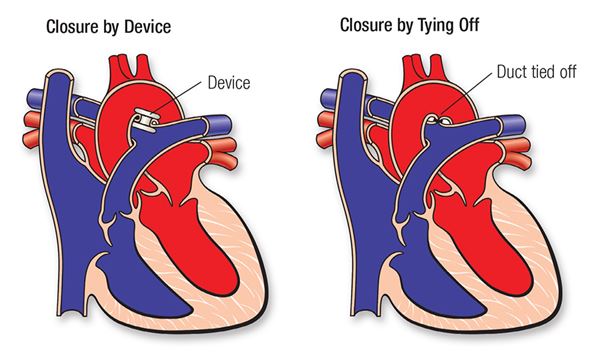
If treatment is needed, many children can have the PDA closed using a catheter. A thin tube is placed in a blood vessel, usually in the leg. A small device is guided through the catheter to close the opening.
Some children may need surgery. An incision is made on the left side of the chest, and the blood vessel is closed with stitches or a small clip. If there are no other heart problems, this restores normal blood flow.
In premature babies, medication can sometimes help close the PDA. After the first few weeks of life, medication is less likely to work, and a procedure may be needed.
PDA in children: What families need to know
Will my child’s activities be limited?
If the PDA is small, or if it has been closed, your child can usually take part in normal activities without extra risk.
Your child’s pediatric cardiologist may check them from time to time to look for any problems. The long-term outlook is often excellent. Most children do not need medication or more procedures after treatment.
PDA in adults: What to expect
Should a PDA be repaired in adulthood?
If the PDA is small, it may not need to be closed. It usually does not cause the heart and lungs to work noticeably harder.
If the PDA is moderate or large, extra blood flow to the lungs can cause problems over time. Closing the PDA can help prevent these problems.
Many PDAs can be closed using a catheter, a thin tube placed in a blood vessel. A small device is used to close the opening. This is called an interventional or therapeutic catheterization.
Some people may need surgery. A small cut is made in the left side of the chest, and the vessel is closed with stitches, or a small clip. If there are no other heart problems, this restores normal flow.
If I still have a PDA, should I limit my activities?
If the PDA is small, or if the PDA has been closed, you can usually take part in normal activities without extra risk.
If the PDA is moderate or large, or if there is high blood pressure in the lungs (pulmonary hypertension), some limits on activity may be needed. Your cardiologist can help guide what’s safe for you.
Ongoing Care
Medical treatment and follow-up
Your cardiologist may check you from time to time to look for any problems. The long-term outlook is usually excellent.
If you have a small PDA, you will need occasional follow-up with a cardiologist. If the PDA has been closed, long-term care is usually not needed unless there are other heart problems.
Most people do not need medication after the PDA is closed. Your cardiologist can use simple, noninvasive tests to check your heart if needed.
Activity Restrictions
Most people with a small PDA or a PDA that has been closed do not need any special precautions. They can take part in normal activities without extra risk.
After surgery or a catheter procedure, your cardiologist may suggest limiting activity for a short time while you recover.
People with pulmonary hypertension may need to limit some activities. Your cardiologist can help guide what’s safe for you.
Endocarditis Prevention
Most people do not need antibiotics to prevent infective endocarditis after PDA closure. Your cardiologist will tell you whether antibiotics are recommended before certain dental procedures.
They may be recommended for people who have:
- Had endocarditis before
- Artificial heart valves, a pacemaker or a defibrillator
- An unrepaired PDA with associated pulmonary hypertension or low oxygen levels
- A weakened immune system
- Heart damage from rheumatic fever
- Poor dental health
- IV drug use
See the section on endocarditis for more information.
Pregnancy
Most women with a small PDA or repaired PDA can have a low-risk pregnancy, especially if there is no pulmonary hypertension or signs of heart failure.
Will You Need More Surgery?
Once a PDA is closed, more surgery is rarely needed. In rare cases, a small opening may remain. Whether it needs treatment depends on its size.