Cutting a watermelon tired him out. Now this patient is thriving.
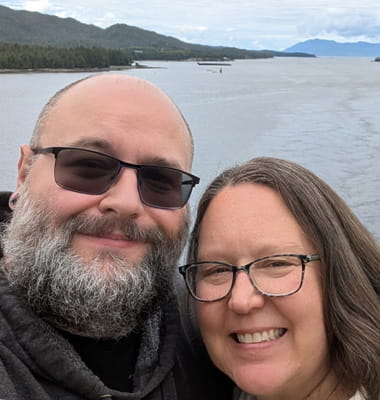 The cough Chris Rose couldn’t seem to shake tagged along on a vacation to North Carolina’s Outer Banks with his wife, Alexis. She insisted he go to an urgent care facility — and that turned out to be the first step of the diagnosis that probably saved his life.
“My heart rate was 180,” said Chris, recalling that day. “They told me I needed to go to the hospital immediately.”
A heart issue? That was hard for him to believe. He was only 36.
Ultimately he was diagnosed with atrial fibrillation (AFib), an irregular heartbeat or arrhythmia. An estimated 10.5 million Americans have AFib, and an estimated 62% have no knowledge of the condition before diagnosis.
AFib is treatable if caught early and often manageable, but if not, it can lead to complications such as stroke, blood clots or heart failure.
After his AFib diagnosis, Chris received care closer to home at HCA Healthcare’s Chippenham Hospital in Richmond, Virginia, where a cardiac electrophysiologist performed an electrical cardioversion to restore the heart’s regular rhythm by delivering a low-energy electrical shock.
A few days later, Chris needed a secondary nonsurgical procedure called a catheter ablation as a part of his continued AFib care. The procedure creates tiny scars in the heart tissue that block faulty electrical signals.
During the eight weeks leading up to his ablation, Chris experienced the exhausting effects of AFib. He remembers being so worn out after cutting a watermelon that he felt like he’d been on a six-mile hike. His skin was gray, Alexis said, and she was so scared she’d lose him that her own doctor prescribed anxiety medications.
“I would stare at him while he slept,” she said. “I didn't know if he was going to make it.”
Even with medication, Chris’ heart was beating fast all the time, ranging between 120 and 150 beats per minute. His ejection fraction, a measure of how much blood leaves the left ventricle with each heartbeat, was 5%. Normal is between 55 and 70%.
“There was the very real possibility that I was going to die,” Chris said.
Following the ablation, Chris’ care team and loved ones saw encouraging progress. It’s usually a single day procedure, but Chris ended up staying overnight because his AFib had been so severe. Seeing her husband hours afterward, Alexis noticed his skin was pink, which it hadn’t been in months. He looked healthy, and he felt better.
But Chris knew procedures, medications and doctor visits alone wouldn’t keep him healthy. His own actions played an equally important role.
“You have this condition and you have to figure it out and do the things they tell you to do and hope for the best,” he said. “If you don’t do the things, you’re not helping yourself.”
Chris needed to wait four months to begin cardiac rehab, but he could start making changes to his diet right away. He’d never paid attention to what he ate other than how good it tasted, but he began taking his nutrition seriously.
He and Alexis cleared their pantry of processed foods and looked for low-salt recipes and ingredients. They began using an air fryer, a simple change that let them enjoy crispy foods without added oil.
“The toughest part was giving up super-salty foods like chips,” Chris said. “You can have stuff, but just not in excess. It’s not fun or easy, but if you want to stick around on the planet, you have to do the physical activity and follow the health plan.”
In October 2023, he was cleared to begin cardiac rehab. He went into it determined to get better — to fight, quite honestly, for his life. Three days a week for six months, he did exercises that progressively got more intense as his heart grew stronger.
Sandra Rogers, MSN, RN-DC, his cardiac rehab coordinator at HCA Healthcare’s Chippenham Hospital, knew Chris was highly motivated because he’d already started lifestyle changes.
“It was such a privilege to be a part of Chris' recovery journey,” Rogers said. “Through progressive exercise, his functional capacity improved by 227%. He is a cardiac rehab superstar.”
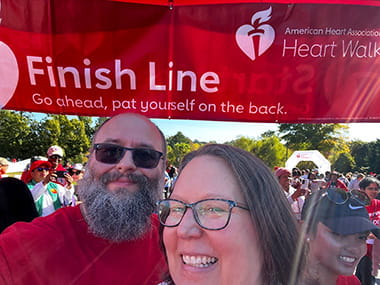 Chris also met with the hospital’s registered dietitian, and he eventually lost 100 pounds. He completed rehab two years ago and remains as motivated as ever to keep walking, lifting weights and moving, knowing that AFib could return at any time. He lives a healthy lifestyle for himself. Chris stresses that doing it for anyone else would defeat the purpose.
“Otherwise, you’re putting a whole lot of your burden on them, and I don’t think that’s cool,” he said. “They can’t be responsible for you.”
Although he no longer constantly thinks about his condition, he wears a smartwatch to monitor his heart rate and ensure it stays within a safe range. He’s now completely off heart medication and sees his electrophysiologist once a year.
Alexis loves that they walk together, often at American Heart Association events. Together 11 years and married for four, they’ve always been close, but this shared health journey has solidified their relationship even more.
“He’s just like, ‘I want to do life,’” Alexis said.


