What is TAVR? (TAVI)
Quick Facts
- TAVR, also called TAVI, is a minimally invasive procedure that replaces a damaged heart valve without removing it.
- TAVR can be an option for people across all surgical risk categories. However, surgery may still be recommended in some cases.
During this minimally invasive procedure, your doctor places a new heart valve inside your old, damaged aortic valve without removing it. The new valve takes over the job of controlling blood flow. This procedure is called transcatheter aortic valve replacement (TAVR) or transcatheter aortic valve implantation (TAVI). It is a treatment option for some people with severe aortic stenosis.
How does TAVR work?
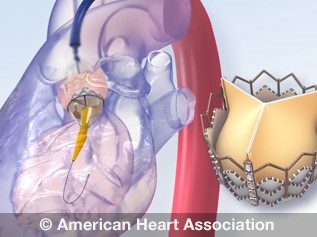
Much like a stent is guided through an artery, a replacement valve is delivered to your heart through a thin, flexible tube called a catheter. The replacement valve is compressed during placement and then expanded once it reaches the diseased valve.
When the new valve expands, it pushes the old valve leaflets aside. The tissue in the replacement valve then begins regulating blood flow through your heart.
Who is a good candidate for TAVR?
TAVR is available for people with severe aortic stenosis across all surgical risk categories. However, surgical aortic valve replacement may still be the recommended option for some people based on factors such as:
- Age
- Life expectancy
- Overall health
- Individual considerations
Your healthcare team will consider these factors and work with you to determine the best treatment option for you.
TAVR can be an effective treatment option to help improve the quality of life for people with severe aortic stenosis.
What happens during a TAVR procedure?
Traditional valve replacement often requires open-heart surgery with a sternotomy, a procedure that opens the chest. In contrast, TAVR can be performed through small openings that leave the chest bones in place.
Although TAVR is not without risks, it can provide a treatment option for people who may not otherwise be candidates for valve replacement. Some people may spend less time in the hospital after TAVR than after surgical valve replacement.
Your cardiologist or surgeon will choose the approach that provides the safest and most effective way to reach your aortic valve. The two most common are:
- Transfemoral approach: The replacement valve is delivered through the femoral artery, a large blood vessel in the groin. This approach does not require a chest incision.
- Transapical approach: The valve is delivered through a small incision in the chest, accessing the heart through the tip of the left ventricle (the apex).
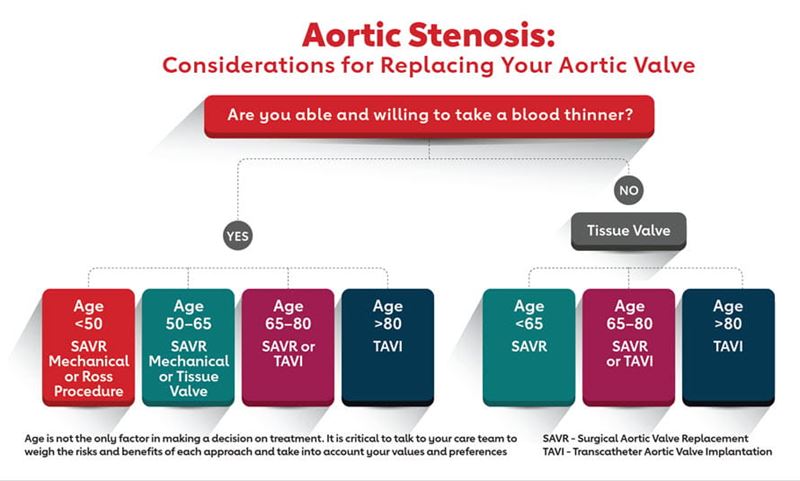
View Aortic Stenosis: Considerations for Replacing Your Aortic Valve (PDF)
Is financial assistance available for TAVR?
TAVR is approved and available for qualifying patients enrolled in Medicare and Medicaid. More information is available through the Centers for Medicare & Medicaid Services (CMS)(link opens in new window).
You can also learn more about health coverage options and government programs that may make care more affordable through HealthCare.gov(link opens in new window).
Additional resources:
- Answers by Heart sheets: What is TAVR? (PDF) | Spanish (PDF)
- Pre-surgery Checklist (PDF) | Spanish (PDF)
- Recovery Tracker (PDF) | Spanish (PDF)
An online community where sharing is our strength.

The Support Network connects you with people who have been there before. From heart disease survivors to those caring for loved ones, they know what you’re going through and are always there, so you don’t go through it alone. From sharing stories to offering support, find your community here.


