Top 10 Things to Know from the 2026 American Heart Association/American Stroke Association Acute Ischemic Stroke Guideline
- There are several types of stroke. Ischemic stroke is the most common type and occurs when blood flow to the brain is suddenly blocked in a vessel, usually by a blood clot. Types of stroke
- Strokes can occur in babies and children and recognizing the signs is critical. Although strokes are not common in children, it's important to act quickly and call 911 if they show any signs. Stroke in children
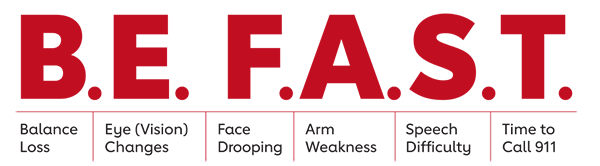
- Know the most common stroke symptoms that are represented by B.E. F.A.S.T. And remember, there are other important warning signs.
Stroke symptoms can be subtle and easy to miss. For example, someone’s face might droop just a little, or their speech might still make sense but sound a bit different.
If you are experiencing stroke symptoms or notice stroke symptoms in someone else, act fast and call 911. Time loss leads to more brain loss.
- Know when symptoms started. The medical care team may ask, 'What time did the symptoms start?’ This information helps the medical team decide which treatments can be safely used, since some treatments only work if given within a certain amount of time from when the symptoms started.
- If possible, have someone with you or on a video call if you are going to the emergency room because you are experiencing symptoms of a stroke. They can help the clinician notice any behavior that is unusual for you, but that others may not notice.
- In the hospital, the medical care team is working quickly to check if you are having a stroke and to give you the best treatment. This is some of the information they are thinking about:
 |
Vital signs Blood pressure, breathing rate, body temperature, and pulse rate can affect how well a treatment will work for a patient. |
 |
Stroke Severity Health care professionals often use the NIH Stroke Scale to assess the severity of the stroke and determine which parts of the brain are affected. |
 |
Timing of symptoms and treatment Different treatments need to be started within a certain amount of time to work best. |
 |
Pictures of the brain A CT, MRI, or other scan can show where a stroke occurred in the brain and help clinicians decide which treatment will work best. |
 |
Age Different treatments may work differently based on a patient's age, particularly for kids or older adults. |
 |
Overall health Other health conditions could change which medicines or procedures the patient needs. |
 |
Procedures needed Depending on the severity of the stroke, patients may need treatments such as IV medications, oxygen to support breathing, and an emergency procedure or surgery. |
- If the medical care team diagnoses a stroke, they may provide the following drugs or procedures for treatment. Your treatment will depend on several factors unique to your stroke.
Medications:- Thrombolytics – These are drugs that can break up a blood clot and are given through an I.V. or catheter, not through a pill. Two common types of thrombolytics used to treat acute ischemic stroke are Alteplase and Tenecteplase.
- Dual Antiplatelet Therapy (DAPT) – This means taking two drugs that help stop blood clots from forming in the blood vessels. This is given to prevent another stroke from happening.
- Endovascular Thrombectomy - This is a minimally invasive procedure that uses a catheter and a device to remove the blood clot. This is also called mechanical thrombectomy.
- While you are in the hospital, it can be challenging to understand who is on your medical team and what their roles are.
Healthcare professionals on your stroke care team and how they will help - After stroke, some patients may experience health issues that the medical care team will need to treat early in recovery, possibly while still in the hospital. This might include blood clots, difficulty speaking (aphasia), difficulty swallowing (dysphagia), and mental health conditions like depression. Early treatment can help.
- Recovering from a stroke looks different for everyone. Learn more about stroke recovery, how rehabilitation can help, common ways people are affected by stroke, and caregiver support. You might also find it helpful to ask your clinician to show you your brain scan images and explain the type of stroke you experienced. Remember that advocating for yourself is important in your recovery. View the Life After Stroke Guide


