Aorta Health: Risks and Symptoms of Aneurysm
Quick Facts
- The aorta carries oxygen-rich blood from the heart to the body.
- An aortic aneurysm is a weakened or bulging area on the wall of the aorta.
- Aortic aneurysms can cause a rupture or dissection.
- Symptoms of an aortic emergency should be treated right away.
Understanding the aorta and its job in circulation
The aorta is the main and largest artery that carries oxygen-rich blood from the heart to the rest of the body. The blood leaves the heart through the aortic valve. Then it travels through the aorta to other major arteries that supply the brain, arms, spinal cord and internal organs throughout the chest and abdomen.
The aorta can be more than an inch wide in some places and has three layers:
- Inner layer (intima)
- Middle layer (media)
- Outer layer (adventitia)
Any problem affecting the aorta can threaten the heart and entire body.
What is an aortic aneurysm?
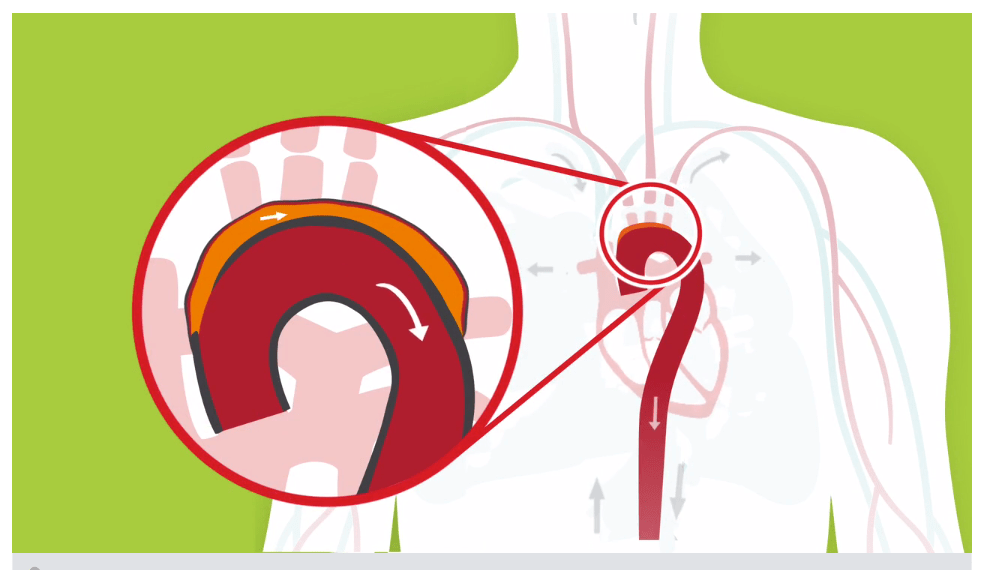
An aortic aneurysm is a weakened or bulging area on the wall of the aorta that may occur anywhere along its length.
Aortic aneurysms can cause two major complications:
- Rupture: The weakened or ballooned area may develop a hole, called a rupture, that allows blood to burst out into the surrounding tissues. This is life-threatening.
-
Dissection: The blood pumped forcefully through the aorta can split the inner layers of the aortic wall, allowing a buildup of blood to continually leak into the space. This further splits the artery wall and can lead to:
- Reduced blood flow to vital organs (ischemia)
- Further weakening of the aorta
- Rupture
What are the symptoms of an aortic emergency?
Some symptoms of an aortic emergency can feel like those of a heart attack, such as chest pain or jaw pain. However, aortic dissection or rupture often causes sudden, severe, “tearing” or “stabbing” pain that may occur in the neck, jaw, chest, back, abdomen or shoulder. The location of the pain depends on the location of the aorta involved. Because the aorta runs from above the heart to below the navel, severe pain may occur anywhere along its course. Additional symptoms of a rupture may include:
- Fainting or sudden loss of consciousness
- Difficulty breathing
- Sudden weakness, especially on one side of the body
- Clammy or sweaty skin
- Nausea or vomiting
- Signs of shock (such as low blood pressure, rapid heart rate or confusion)
Aneurysms and dissections of the aorta are life-threatening medical emergencies. Call 911 right away if you or someone else develops symptoms of an aortic emergency.
How is an aortic aneurysm or dissection treated?
The two main treatment options are surgery and/or medications.
-
Surgery may be needed to repair or replace the weakened or damaged part of the aorta. This may be done through:
- Open surgical repair
- Endovascular repair, in which a stent graft is placed inside the aorta through a small incision in the groin
- Medications are used to lower blood pressure and reduce stress on the aortic wall. Medication alone is not a treatment for rupture but may be appropriate for stable, unruptured aneurysms.
Risk factors for aortic aneurysm and dissection
Common risk factors include sex (male), advanced age and genetics or family history. In addition, people with these conditions may be at higher risk for an aortic aneurysm or dissection:
- High blood pressure. The increased force of blood can weaken the artery walls.
- Genetic conditions, such as Marfan syndrome or Ehlers-Danlos syndrome. These conditions affect connective tissue and can weaken the aorta.
- High cholesterol or atherosclerosis. Plaque buildup can increase inflammation and weaken blood vessel walls.
- Inflamed arteries. Certain diseases and conditions, such as vasculitis, can cause inflammation of blood vessels.
- Trauma, such as car accidents, can damage the aorta.
- Smoking. A history of smoking 100 or more cigarettes in a lifetime is a major risk factor for abdominal aortic aneurysm.
- Poor diet. Diets high in saturated fat, trans fats, added sugars and sodium, or low in fruits, vegetables and whole grains, can contribute to high blood pressure, high cholesterol and obesity. This may increase the risk of aortic aneurysms.
- Lack of regular exercise. Regular physical activity can help reduce blood pressure and support overall cardiovascular health.
Screening: The U.S. Preventive Services Task Force recommends ultrasound screening for abdominal aortic aneurysm in men ages 65-75 who have ever smoked, even if they have no symptoms.
People living with aortic disease or other heart-related conditions can improve outcomes by:
- Reporting any symptoms right away
- Getting regular checkups
- Maintaining heart-healthy habits